30 Ways to Relieve Stress Using the Senses
When people are dysregulated, it’s not primarily a thinking problem. It’s physiological. The nervous system is activated, shut down, or oscillating between both. In that state, cognitive strategies have limited impact because the body is already driving the response.
Sensory input works differently. It acts directly on the nervous system.
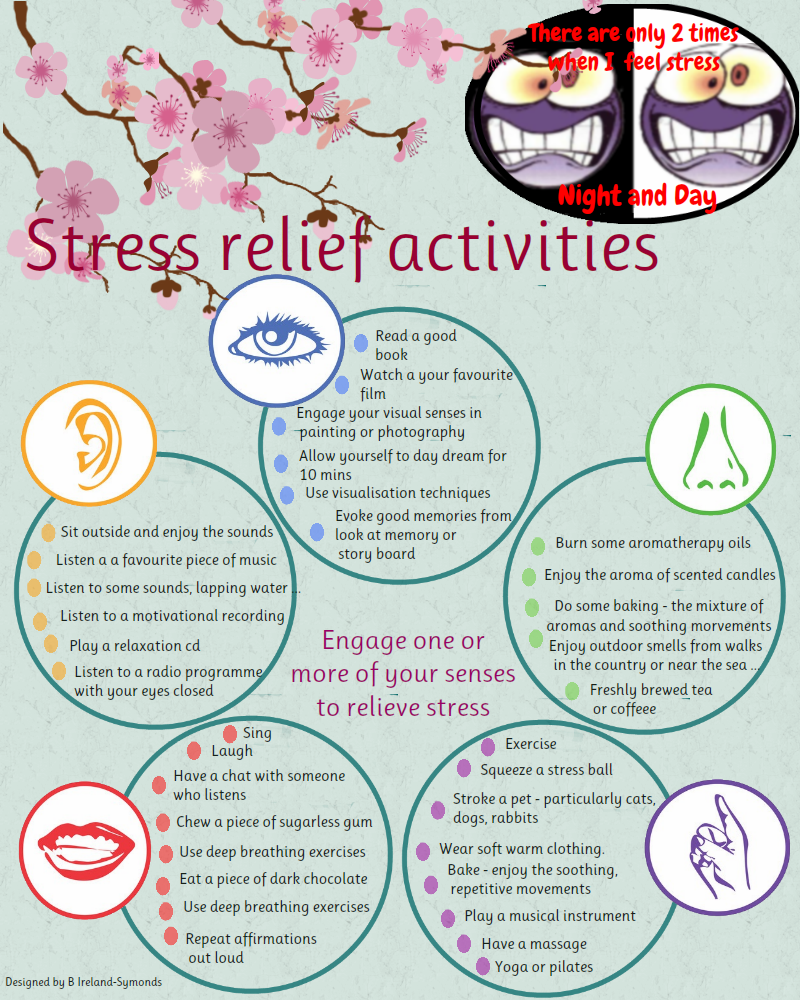
The activities listed above are effective because they engage sight, sound, smell, taste and touch in a deliberate way. This provides orienting cues, rhythmic input, or grounding sensations that help shift the body out of threat states and back toward regulation.
Why this matters in trauma
Trauma increases sensitivity to internal and external stimuli. The system can become hypervigilant or, at the other end, dissociated. In both cases, there is a loss of stable regulation.
Sensory engagement helps to recalibrate this by:
- directing attention outward in a controlled way
- introducing predictable, tolerable input
- interrupting escalating arousal or deepening shutdown
This is not about distraction. It is about stabilisation.
Connection to emotional and binge eating
Emotional and binge eating often function as regulation strategies. They can reduce arousal, numb distress, or provide a temporary sense of containment.
The issue is not lack of willpower. It is that the system has learned to rely on one effective method.
Expanding sensory-based regulation gives the body alternative pathways. For example:
- strong flavours or temperature can shift dissociation
- repetitive movement or touch can reduce agitation
- sound and rhythm can slow physiological activation
Over time, this reduces the immediacy of the urge to eat in response to distress, because the system has other ways to regulate.
How to use the list
The point of the 30 strategies is not to use all of them. It is to identify what your system responds to.
Some people regulate through movement and touch. Others through sound or visual input. The response is individual and often shaped by history.
The useful question is not “what should I do?” but “what changes my state, even slightly?”
That shift, however small, is the mechanism of regulation.
In therapy
Sensory work can be integrated into therapy to help stabilise the nervous system while deeper material is processed. This is particularly important where there is chronic dysregulation, trauma, or entrenched coping patterns like binge eating.
It allows the work to proceed without overwhelming the system, and builds a more reliable internal capacity for regulation over time.