Co-Authored by Body Liberation’s Lindley Ashline.
As a little girl, Alice loved to dance. No matter whether there was music and an audience, or just a sidewalk or field, Alice would swoop and swirl, letting her arms sail wildly through the air, feet moving in a rhythm that came to her with each moment, twirling until she was dizzy only to fling herself to the grass and laugh out loud.
As adults, how many of us feel that same impulsive joy in dancing and movement? How many of us feel that spontaneous rhythm that compels us to let our feet lead and fling our arms wide as if we could fly?
For many women I work with, particularly those navigating emotional eating, trauma and low self-worth, reconnecting with the body can feel difficult, or even feel unsafe. Movement and dance can offer a gentle and accessible way back into the body, supporting healing, regulation and reconnection over time.
With each year we spend on the planet, we absorb messages about our maturing bodies, and often those messages are centred in shame. Feeling shame about our bodies can prevent us from moving, dancing and finding pleasure in our bodies.
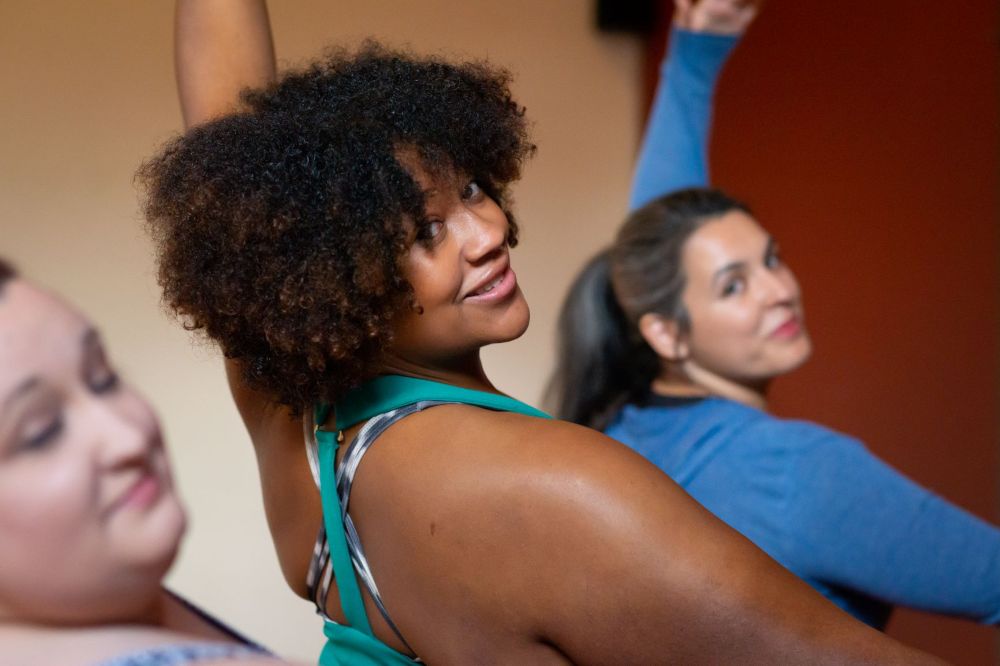
Part of my own recovery from early childhood trauma, emotional neglect and the resulting emotional eating and body image concerns has been engaging in dance and movement practices at women’s retreats and classes where embodiment is central. Following a Health at Every Size approach, dancing is for every body.
The benefits of dancing impact us on physiological, emotional, psychosocial, psychological, neurological and spiritual levels. It can deepen self-awareness and help us connect with parts of ourselves that may have been held out of awareness. Movement can also support the release of feelings that have been held in the body.
Below are some examples of movement and dance-based practices that can support this process of reconnection.
Dancing helps us come back to our bodies: Nia® Practice
Nia® is inspired by the martial arts, dance arts and healing arts. It is a body-centred movement practice that integrates physical, mental and emotional awareness.
Often described as more than a workout, Nia combines dance, martial arts and mindfulness, supporting both physical conditioning and inner awareness.
Dancing helps us rediscover joy in our bodies: No Lights No Lycra
“If you can dance and be free and not embarrassed you can rule the world.” – Amy Poehler
No Lights No Lycra offers a simple but powerful concept: dancing in the dark, with no mirrors, no teachers and no judgement.
Originating in Melbourne, it creates a space where people can move freely, without being watched, allowing a more spontaneous and less self-conscious relationship with the body.
Dancing helps us find community: 5Rhythms
5Rhythms, developed by Gabrielle Roth, is a dynamic movement practice that supports creativity, connection and self-expression.
Each rhythm invites a different quality of movement, allowing for the expression of a wide range of emotional states. Practised in a group setting, it can foster a sense of connection and belonging.
Dancing helps us find our wildness: QOYA
“In QOYA, we remember our essence is wise, wild, and free.” – Rochelle Schieck
QOYA integrates yoga, dance and sensual movement, encouraging connection to the body through intuitive expression.
It offers a space to explore movement not as performance, but as a way of accessing inner experience.
Dancing helps us recover from trauma: Movement Therapy
When trauma is experienced, one common response is disconnection from the body.
Dance and movement therapy uses movement as a therapeutic tool to support integration across emotional, cognitive and physical levels.
It can support body image, self-esteem, emotional regulation and relational connection.
Dancing helps us befriend our bodies
Reconnecting with the body is often an important part of healing from trauma, emotional eating and low self-worth.
Movement does not need to be structured or perfect. It can begin simply, with small moments of awareness, curiosity and presence.
This is often part of the deeper work we do in therapy, gently rebuilding a relationship with the body over time.
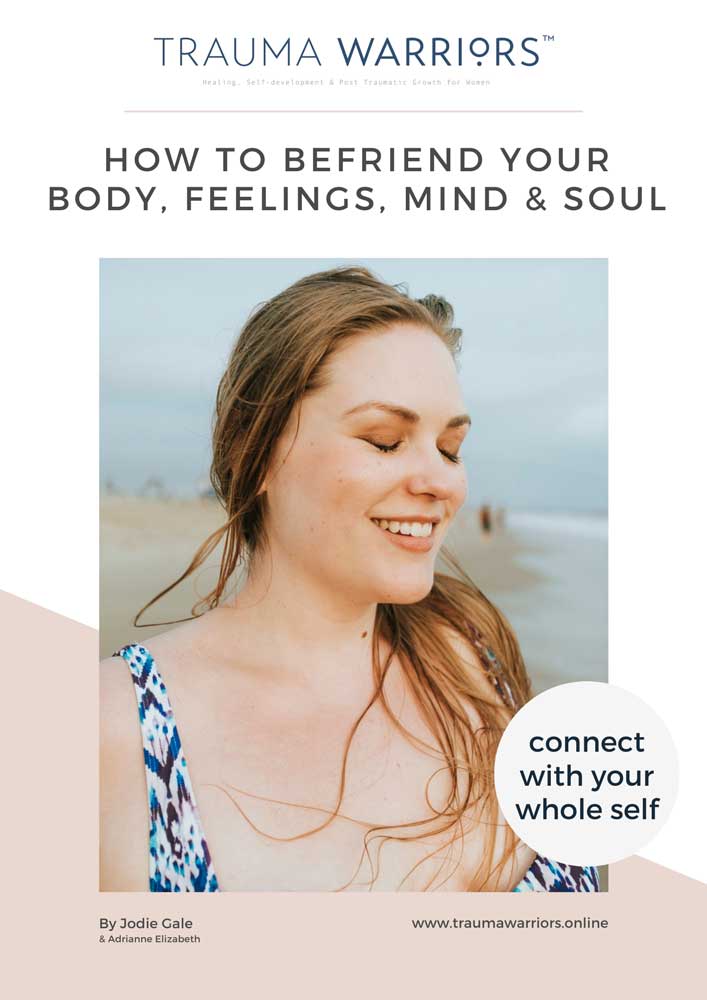
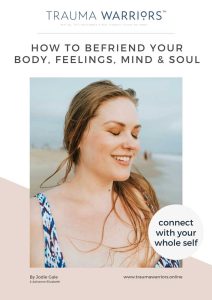
If you would like to begin this process, you can start with my free resource: Befriend Your Body, Feelings, Mind & Soul®.