
The mother–daughter relationship plays a central role in shaping a woman’s sense of self, particularly in the context of early attachment, emotional neglect, and complex trauma. When this relationship is difficult, strained or impacted by narcissistic family systems, it can influence identity, self-worth, relationships, and patterns such as emotional eating, people pleasing, perfectionism or self-sabotage well into adulthood. Healing often involves understanding these early dynamics, working with the inner world, and developing a more stable and attuned relationship with oneself.
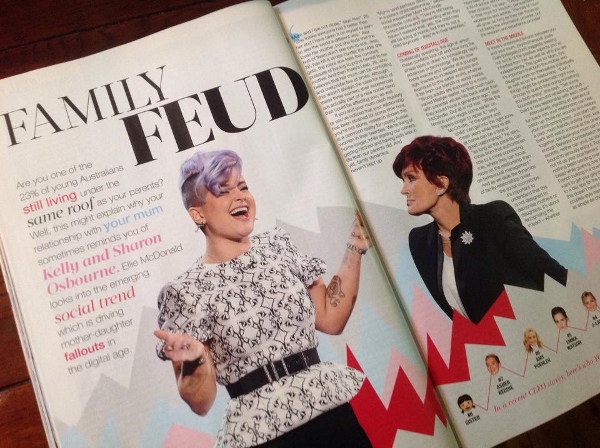
As a psychotherapist specialising in emotional eating, early childhood trauma and narcissistic family systems, I was interviewed by Ellie McDonald, Chief Sub-Editor of CLEO & DOLLY, for an article in the final issue of CLEO Australia. Below is an expanded version of that discussion.
Q: Why is the mother–daughter relationship so important as a daughter reaches adulthood?
The early relationship with mother becomes the foundation for how a woman relates to herself, her needs, and to others. In trauma terms, this is about whether the child has been consistently seen, felt, and responded to, or whether she has had to adapt in order to maintain connection.
To develop healthy relationships with ourselves and others, we need to have internalised an imago of the ‘good enough’ mother who is able to attune, nurture, and respond to our physical, emotional and psychological needs. This internalised experience becomes how we later care for ourselves, how we regulate our emotions, and what we come to expect from others in relationships.
When this has not been available, whether due to abuse, trauma, emotional neglect, or a lack of attunement, we often grow up searching outside ourselves for validation, worth, and a sense of belonging. This can show up in relationships, in work, and in how we relate to our bodies, feelings, mind and sense of self.
For most women, the relationship with mother is the first and primary attachment relationship. It shapes:
- our sense of identity
whether we experience ourselves as separate, known, and real, or as an extension of another - whether our feelings and needs are acceptable
whether we learn to trust and express our inner experience, or suppress and question it - our self-worth and self-esteem
whether we feel inherently worthy, or believe we must earn love and belonging - our relationship with our body and sexuality
whether the body is experienced as safe and connected, or controlled, judged, or disconnected - our capacity for nourishment and self-care
whether we can meet our own needs, or rely on external validation and regulation - how much space we feel allowed to take up in the world
whether we feel entitled to exist fully, or adapt to maintain connection and approval
If a mother has been able to work through her own trauma and identity, she is more able to support her daughter’s separation, autonomy, and sense of self. This becomes especially important as a daughter moves into adulthood.
Q: What are the negative effects of a strained mother-daughter relationship?
A: When this relationship is strained, particularly in the context of emotional neglect or narcissistic wounding, the impact is not just relational but developmental. It shapes how a woman experiences herself internally and how she moves through the world.
We know that strains in the relationship with mother throughout childhood and beyond are major contributing factors to physical, emotional, psychological and spiritual wellbeing. Symptoms may include addiction, anxiety, depression, eating disorders, poor relationships, a lack of self-worth as well as numerous other concerns (Reference: Why Love Matters: How Affection Shapes the Baby’s Brain).
Some of the negative effects that we may experience are:
- Extremely high and unrealistic expectations of ourselves
often reflecting internalised projections or unmet aspirations from the mother - Tyrannised by a harsh inner critic
where external criticism has been internalised as a way of maintaining safety or approval - A lack of self-acceptance, self-esteem, self-compassion and self-confidence
reflecting a lack of mirroring and attuned response in early development - We give more than we are able to receive
often through caretaking, rescuing, or pleasing, as a way of maintaining connection - We do too much because we believe this is the only way to get our needs met
linking worth to effort, achievement, or usefulness - We are increasingly angry but unable to express it
anger having been suppressed or turned inward to preserve the relationship - We believe at the core that we are rotten, flawed or not good enough
often linked to not being seen as a separate and valued self - We downplay our beauty, intelligence, gifts and achievements
as a way of maintaining connection or avoiding conflict with mother. Repression of the Sublime is a common problem playing out in adulthood.
Q: How does this show up in therapy
A: These patterns rarely present directly as “mother–daughter issues.” Instead, they show up as symptoms, behaviours, and relational difficulties that require deeper exploration.
As a psychotherapist for over 25+ years, I have worked with many women who enter therapy because of symptoms such as eating disorders, workaholism or relationship problems. While symptom relief is part of the work, a significant portion of medium to long-term therapy involves teasing out the enmeshed relationship and separating psychologically from mother (and father, as well as other internalised figures) and working with the inner child.
This can be long-term and painful work, as the daughter begins to ask:
- who am I, if I am not my mother?
- who am I, if I am not who my mother told me I am?
This is grief work. It involves:
- letting go of identities formed in adaptation (subpersonalities/internal family systems)
- recognising what cannot be changed in the mother
- accepting the reality of the relationship
It also involves:
- growing up and (re)mothering ourselves in a loving and nurturing way
- developing an internal capacity for care, regulation, and worth
- coming into relationship with parts of the self that have been disowned or split off
In Jungian psychology, this can be understood as engaging with and integrating aspects of the psyche that have not yet been fully lived.
Q: How common is the breakdown of a mother-daughter relationship?
A: Many women have an extremely complex relationship with their mother. It is not uncommon for the relationship to move through periods of strain, distance, repair, and transformation over time, particularly as awareness grows and boundaries begin to form.
It is also more common than many expect for relationships to reach a point where distance becomes necessary. In some cases, daughters make the difficult decision to step back, or even fully estrange, when the relationship has become consistently detrimental to their emotional, psychological, or physical wellbeing.
There has been increasing public commentary suggesting that estrangement is a trend, often attributed to social media or external influence, even blaming therapists. In clinical practice, this is not what is observed. Having worked for over 25 years with women navigating these dynamics, the decision to create distance is rarely made lightly or impulsively.
More often, these women present with:
- significant guilt and self-blame
- a long history of attempting to repair or maintain the relationship
- confusion about their own needs and boundaries
- grief, ambivalence, and internal conflict
For many, creating distance comes after repeated attempts to make the relationship work, and only when it becomes clear that continuing in the same dynamic is harmful. It is often experienced not as a rejection of the mother, but as an act of self-preservation.
At the same time, relationships can and do change. With support, insight, and willingness on one or both sides, some mother–daughter relationships are able to repair and transform in meaningful ways over time.
Q: What are some of the reasons why mother-daughter relationships breakdown?
A: The most problematic mother–daughter relationships are often those in which the mother has experienced significant narcissistic wounding, and as a result, parents from this wound.
If the mother has herself not been seen or heard, and her own needs for safety, love, worth, and identity have not been met, she may:
- pass down the intergenerational trauma
- be neglectful of the daughter’s needs, particularly at an emotional level
- lack empathy and feel resentment, anger or even rage at having to meet the needs of the daughter
- have unrealistic expectations of her daughter, often shaped by her own unmet ambitions or identity struggles
- be controlling rather than supportive, limiting the daughter’s autonomy
- overcompensate by parenting in a smothering or enmeshed way, making healthy psychological separation difficult
- show her daughter off like a “perfect” extension of herself in order to gain attention or validation from others
- use the daughter to emotionally offload onto, or position her as a confidant
- seek validation through the daughter’s successes, appearance, or achievements
- feel jealousy or competition, particularly in relation to the daughter’s youth, beauty, or emerging identity
In the examples above, the relationship becomes organised around the mother’s needs rather than the daughter’s self-development. This can be highly destabilising, and at times toxic, to the daughter’s sense of self.
As child psychoanalyst Donald Winnicott writes:
“The mother gazes at the baby in her arms, and the baby gazes at her mother’s face and finds herself therein… provided that the mother is really looking at the unique, small, helpless being and not projecting her own expectations, fears, and plans for the child. In that case, the child would find not herself in her mother’s face, but rather the mother’s own projections. This child would remain without a mirror, and for the rest of her life would be seeking this mirror in vain.”
We all long for our mother to meet us emotionally. When this does not occur, particularly in the context of narcissistic wounding, the daughter is not experienced as a separate self, but as an extension of the mother.
In response, we learn at an early age adaptive and creative ways of getting our needs met, such as:
- pleasing and accommodating others to maintain connection
- rebelling or opposing as a way of creating space
- striving through academic or external achievement to gain recognition
- becoming the “good” or compliant child
- becoming the “sick” or symptomatic child
- taking on caregiving or emotional responsibility
These adaptations are intelligent responses to the relational environment. However, over time, these patterns of being and behaviour often continue into adulthood, shaping relationships, identity, and the ways in which we continue to seek safety, love, and worth.
Q: What are your top tips to help heal from a difficult mother-daughter relationship?
A: Healing the Mother–Daughter Relationship
This pathway is most relevant where the relationship is not fundamentally unsafe, but where both mother and daughter are, in different ways, slightly off track and willing to reflect, take responsibility, and engage in the work of repair.
In these situations, healing is less about going back and reworking every aspect of the past, and more about what becomes possible in the present between two people who are willing to meet each other differently.
This may involve:
- focusing on what is possible now, rather than repeatedly returning to past grievances
- setting clear boundaries around revisiting old patterns that keep the relationship stuck
- building a different kind of relationship, often more adult-to-adult, rather than parent-to-child
- developing new ways of communicating that allow for greater honesty, responsibility, and respect
- seeking therapeutic or mediated support when needed, particularly when patterns feel entrenched
Where there is willingness on both sides, even long-standing dynamics can shift over time. The work is often gradual, requiring patience, consistency, and the capacity to tolerate discomfort as new ways of relating are established.
If the relationship is highly conflictual or becomes harmful, periods of distance may still occur. While painful, this can support separation and individuation, allowing each person to return to the relationship with greater clarity, stronger boundaries, and a more stable sense of self.
Healing the Mother–Daughter Relationship: Tips for Mother
Where a mother genuinely wishes to repair or reconnect, the work begins not with changing the daughter, but with a willingness to reflect on her own patterns, responses, and unmet needs. This can be confronting, particularly where there has been hurt on both sides, but it is often central to any meaningful shift in the relationship.
It is also important to be mindful of narratives that externalise responsibility or position the daughter as the problem. While it can be reassuring to find support, particularly in communities of other parents, approaches that discourage self-reflection or place blame solely on the child are unlikely to support repair, and may deepen the divide where estrangement has occurred.
Healing may involve:
- responding with empathy rather than criticism
even when there is disagreement, prioritising understanding over correction helps rebuild safety and connection - listening without defensiveness
this can be challenging, particularly if what is being shared feels painful or difficult to hear, but it allows the daughter’s experience to be received rather than dismissed - supporting autonomy and individuality
recognising the daughter as a separate adult with her own thoughts, feelings, and identity, rather than an extension of the mother - taking responsibility for your own needs and healing
developing the capacity to meet your own emotional needs, rather than relying on the daughter to do so, and being open to exploring your own history and patterns - learning frameworks that support relational repair
approaches to parenting such as Circle of Security and Nonviolent Communication can be helpful in understanding attachment needs, emotional attunement, and how to communicate in ways that reduce defensiveness and increase connection
Where there has been estrangement, repair is often a gradual process. It requires patience, consistency, and a genuine willingness to understand the daughter’s experience, even when it differs from your own.
At its core, this work is about creating the conditions for a different kind of relationship to emerge, one that is no longer organised around past dynamics, but around greater awareness, responsibility, and respect.
Healing the Mother–Daughter Relationship: Tips for Daughter
A: For many women, this work begins with a turning inward. Rather than continuing to orient around the mother, the focus gradually shifts towards understanding the self, often for the first time in a clear and consistent way.
This is not a quick or linear process. It involves disentangling from internalised dynamics, recognising patterns that once ensured connection or safety, and developing a more grounded relationship with oneself.
Healing may involve:
- taking time to understand who you are separate from your mother
this includes exploring your own identity, values, needs, and desires outside of the roles or expectations you may have internalised - working with a trauma-informed / trauma psychotherapist
particularly someone experienced in inner child work and complex trauma, where the therapeutic relationship itself becomes a place of repair, helping you internalise a more attuned and compassionate way of relating to yourself - recognising both the strengths and limitations in the relationship
allowing space for a more integrated view, rather than idealising or rejecting entirely - developing boundaries and assertiveness
learning how to identify your limits, express your needs, and tolerate the discomfort that can arise when long-standing patterns begin to shift - allowing space for anger and understanding what it expresses
anger is often protective and points to unmet needs, hurt, or violations that have not been acknowledged - recognising your mother’s history without excusing harm
understanding context can bring clarity, but it does not require you to tolerate behaviour that is harmful - shifting from external validation to internal grounding
gradually developing a sense of worth and stability that is not dependent on the mother’s response or approval
NB: Ageing and, for some, becoming a mother can shift perspective and deepen understanding of the complexity of the role. This can bring empathy, but it does not negate the impact of earlier experiences.
Why doesn’t communication alone repair some mother–daughter relationships?
A: If the relationship with your mother continues to feel toxic or be harmful, it is important to take your wellbeing seriously and consider what boundaries, distance, or support are needed to care for yourself. In some situations, you may decide to reduce contact or step back from the relationship for a period of time in order to stabilise your emotional and psychological health.
It is also important to address an increasingly common narrative directed towards adult children, that they simply need to communicate better, try harder, or learn how to navigate conflict more effectively. While communication skills are important, this perspective can overlook the relational context in which many daughters developed.
In my clinical practice, many adult children have already attempted to express their needs, set boundaries, and repair the relationship, often repeatedly, without these efforts being received or responded to in a meaningful way. Over time, this can lead to exhaustion, self-doubt, and ultimately, withdrawal.
For many, the issue is not a lack of willingness or skill, but that earlier in life it was not safe to express needs or engage in conflict. In some family systems, particularly where narcissistic or borderline dynamics are present, asserting oneself may have been met with withdrawal, shame, volatility, or rage. In these contexts, it was often safer for the child to adapt, accommodate, or silence themselves in order to maintain connection.
Understanding this is important. It allows the daughter to recognise that her patterns were not failures, but necessary adaptations, and that the work now is not simply to “communicate better,” but to develop a different relationship with herself, her needs, and her boundaries.
At times, caring for yourself may also involve acknowledging the limits of what is currently possible in the relationship, and making thoughtful decisions that prioritise your safety, stability, and long-term wellbeing.
ARE YOU STRUGGLING IN YOUR RELATIONSHIP WITH YOUR MOTHER? THERAPY CAN HELP, FEEL FREE TO REACH OUT
INNER CHILD WORKSHOPS
Join the waitlist for my Inner Child Workshops and Online Courses











3 Responses
Thank you. This has saved me so much life.
Jodie~
This has been helpful to read…still digesting. Having a Nacasistic mother has made me look at myself, no doubt a product of. Taking it a step further…it is the repetitiveness of it all. The mother stays in ‘her safe bubble” and looks to get her worth from others. Was an enabler ( my brother drug problems/death) along with my father’s death 1 month previous. My dad was her only focus. Now she is with me, a big-time people-pleaser. I can predict the 5 topics she talks about…gets annoying. Trying to get past and forgive… taking a look at this and trying to work through it. Any suggestions?
Thanks Suzanne. For me, healing is about redirecting the mothering inwards towards oneself, ie. becoming one’s own nourishing mother – then it doesn’t matter so much what mother ‘out there’ is doing. Living with a mother like this is tricky – take good care of yourself and work on keeping yourself safe with boundaries x